


March 10, 2026
Proper denture care is essential for maintaining oral health, comfort, and confidence. Dentures replace missing teeth, but they still require consistent cleaning to prevent plaque buildup, bacteria growth, and unpleasant odors. Many patients quickly realize that cleaning dentures is slightly different from brushing natural teeth. That leads to a common question: Which denture brush works best?
Choosing the right denture brush can make daily cleaning easier and more effective. Some brushes have softer bristles designed to protect delicate denture materials, while others provide stronger scrubbing power for removing buildup. Electric options are also becoming more popular because they simplify cleaning for patients with limited hand mobility.
Understanding the differences between soft, hard, and electric brushes can help you choose the option that best fits your needs. This guide explains how denture brushes work, how to clean dentures properly, and which type of brush may work best for your routine.
Why Denture Cleaning Matters
Dentures sit in the mouth for many hours each day and are exposed to food particles, bacteria, and plaque just like natural teeth. Without proper cleaning, dentures can quickly develop stains, odors, and harmful bacterial buildup.
Daily denture care helps maintain both oral health and the lifespan of the appliance.
Benefits of regular denture cleaning include:
- Preventing plaque buildup that can lead to irritation or infection
- Reducing bad breath caused by trapped food and bacteria
- Protecting gum tissue from inflammation and soreness
- Maintaining the appearance of dentures by preventing stains
- Extending denture lifespan by preventing material damage
Many patients ask their dentist how to clean dentures correctly because improper cleaning methods can damage the appliance. Using the right tools and techniques ensures dentures stay comfortable, functional, and hygienic.
What Is a Denture Brush?
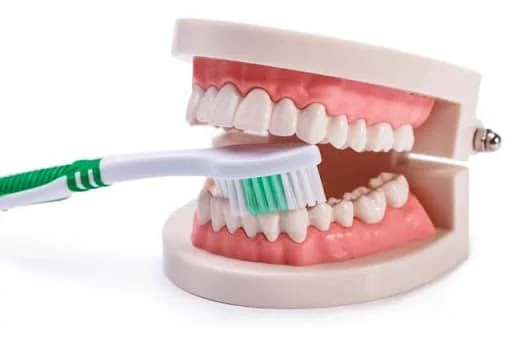
A denture cleaning brush is specifically designed to clean removable dentures safely and effectively. While it may look similar to a regular toothbrush, the design is usually different in several important ways.
Most brushes include features such as:
- Dual brush headsfor cleaning different surfaces
- Firm but flexible bristles that remove plaque without damaging denture materials
- Angled bristle patterns that reach grooves and curves
- Larger handles that provide better grip and control
These brushes are designed to clean both the flat surfaces and the curved areas of dentures, which can be difficult to reach with a regular toothbrush. Using a denture-specific brush helps remove food particles and bacteria without scratching the acrylic material.
Soft Denture Cleaning Brush
Soft denture cleaning brushes are designed with gentle bristles that protect the surface of dentures while still removing plaque and debris.
These brushes are commonly recommended for patients who:
- Have newer dentures
- Want a gentler cleaning option
- Have sensitive gums
- Want to reduce the risk of scratching denture surfaces
Pros
- Gentle on denture materials
- Lower risk of surface damage
- Comfortable for patients with sensitive gums
- Good for daily routine cleaning
Cons
- May not remove heavy buildup as effectively
- May require longer brushing time
- Less effective for removing stubborn stains
Soft brushes are often a good starting point for daily denture care, especially when combined with soaking solutions and non-abrasive denture cleaners.
Hard Brush to Clean Dentures
Hard denture cleaning brushes use firmer bristles that provide stronger cleaning power. These brushes are designed to remove stubborn plaque or food residue more effectively.
Patients may choose harder bristles if they experience frequent buildup or staining.
Pros
- Stronger cleaning ability
- More effective at removing stubborn debris
- Faster plaque removal
Cons
- Can scratch dentures if used aggressively
- May be uncomfortable for sensitive gums
- Requires proper technique to avoid damage
When using a harder brush, it is important to brush gently and avoid excessive pressure. Denture materials can scratch if cleaned too aggressively, which may create areas where bacteria can collect.
Electric Denture Brushes
Electric brushes have become increasingly popular for denture care. These powered devices use vibration or rotating brush heads to remove plaque more efficiently than manual brushing.
Electric options can be especially helpful for patients who have:
- Arthritis
- Limited hand strength
- Difficulty gripping small objects
- Reduced dexterity
Benefits of Electric Cleaning Tools
Electric brushes offer several advantages:
- More consistent brushing motion
- Reduced effort during cleaning
- Improved plaque removal
- Better access to small areas
However, electric denture brushes tend to cost more than manual options. Patients should also make sure the brush head is designed for dentures or sensitive surfaces.
Many modern electric oral care devices are designed to be gentle while still providing powerful cleaning performance.

Comparison Table: Soft vs Hard vs Electric Brush to Clean Dentures
| Brush Type | Best For | Cleaning Strength | Ease of Use | Considerations |
|---|---|---|---|---|
| Soft Brush | Sensitive gums and daily cleaning | Moderate | Easy | Gentle but may require longer brushing |
| Hard Brush | Removing stubborn buildup | Strong | Easy | Risk of scratching if used aggressively |
| Electric Brush | Patients with limited dexterity | Strong and consistent | Very easy | Higher cost and requires charging |
How to Clean Dentures Properly
Using the right cleaning method is just as important as choosing the right brush. Following a consistent routine helps keep dentures clean and comfortable.
Here is a simple step-by-step guide.
1. Rinse Dentures After Eating
Remove dentures and rinse them under running water after meals. This helps remove loose food particles and debris.
2. Brush Dentures Daily
Use a denture brush with a non-abrasive cleaner. Brush all surfaces gently, including areas that rest against the gums.
3. Use Non-Abrasive Cleaners
Regular toothpaste can scratch denture materials. Always use cleaners designed specifically for dentures.
4. Soak Dentures Overnight
Most dentures should be soaked overnight in a cleaning solution to help remove bacteria and maintain shape.
5. Clean Your Mouth
Even if you wear full dentures, it is important to clean your gums, tongue, and cheeks daily to remove bacteria and stimulate circulation.
Common Mistakes When Cleaning Dentures
Even patients who clean their dentures regularly may accidentally use techniques that cause damage.
Some of the most common mistakes include:
Using Regular Toothpaste
Traditional toothpaste contains abrasive particles that can scratch denture surfaces.
Scrubbing Too Hard
Excessive pressure can wear down denture materials and create rough areas.
Skipping Soaking
Soaking dentures overnight helps disinfect them and prevent bacterial growth.
Inconsistent Cleaning
Skipping daily cleaning can quickly lead to odor, plaque buildup, and irritation.
Avoiding these mistakes helps dentures stay comfortable and hygienic for years.
Meet the Doctors
Dr. Joshua G. Smith
Dr. Joshua G. Smith brings extensive experience in restorative dentistry and prosthodontic care. Before becoming a dentist, he worked as a dental laboratory technician, which gave him valuable insight into how dental restorations are designed and fabricated. He earned his dental degree from Midwestern University College of Dental Medicine.
Dr. Smith focuses on long-term patient relationships and personalized treatment planning. His background in prosthodontics helps him provide high-quality care for patients who rely on dentures, implants, and other restorative solutions.
Dr. Navdeep Virk, D.M.D.
Dr. Navdeep Virk is committed to helping patients improve both their oral health and their confidence. He earned his Bachelor of Dental Surgery degree and participated in research programs at the University of Pennsylvania. He later pursued advanced training at the University of Michigan.
Dr. Virk also completed a fellowship through the Las Vegas Institute of Advanced Studies, expanding his expertise in advanced dental techniques. His dedication to continuing education allows him to provide modern solutions that improve both function and appearance.
Areas We Serve
Patients visit our practice from many nearby communities seeking comprehensive dental care and guidance for denture maintenance. We proudly serve patients from:
- Lake Stevens, WA
- Everett, WA
- Snohomish, WA
Our team at Dentistry at Marysville works with patients of all ages to maintain healthy smiles and comfortable dental restorations.

Frequently Asked Questions
1.What type of denture brush is best?
The best option depends on your needs and comfort level. Soft brushes are gentle and safe for everyday cleaning, while harder brushes can remove stubborn buildup. Electric brushes provide convenience and consistent cleaning for patients who prefer powered tools. Your dentist can recommend the best option based on your dentures and oral health.
2.Can I use a regular toothbrush to clean dentures?
While a regular toothbrush can sometimes be used temporarily, it is not ideal. Standard toothbrushes may not reach all denture surfaces effectively. A brush designed specifically for dentures provides better cleaning and protects the denture material from scratches.
3.How often should dentures be brushed?
Dentures should be brushed at least once a day. Many dentists recommend cleaning them after meals as well to remove food particles. Consistent cleaning helps prevent plaque buildup and keeps dentures comfortable to wear.
4.Are electric denture brushes safe?
Yes, electric brushes can be safe when used properly. Many electric brushes are designed to provide gentle but effective cleaning. Patients with arthritis or limited hand strength often find electric brushes easier to use.
5.What cleaner should I use for dentures?
Dentures should be cleaned with non-abrasive denture cleaners or mild solutions recommended by your dentist. Avoid traditional toothpaste or harsh chemicals, which can damage denture materials.<
Protect Your Dentures and Oral Health
Choosing the right cleaning tools and maintaining a daily routine can significantly improve comfort and denture longevity. If you are unsure which cleaning method or brush type is best, a dental professional can help guide you.
At Dentistry at Marysville, our team is happy to answer questions about denture care, cleaning techniques, and long-term maintenance. If you wear dentures or are considering restorative dental treatment, schedule an appointment with our team to keep your smile healthy and comfortable.
New Patient Specials
New patients to Dentistry Marysville are invited to take advantage of one of our first-time visitor specials.
To claim the offer, screenshot or print the coupon and show it at your initial appointment.
$149 New Patient Special Plus $100 Off Your Second Office Visit*
*New patients only. A $369 value. Cannot be combined with other offers or insurance.
$149 New Patient Special Plus Professional Teeth Whitening for ONLY $350*
*New patients only. Cannot be combined with other offers or insurance.
$89 New Patient Special* Limited Exam & X-rays
*New Patients Only. Cannot be combined with other offers or insurance.
